


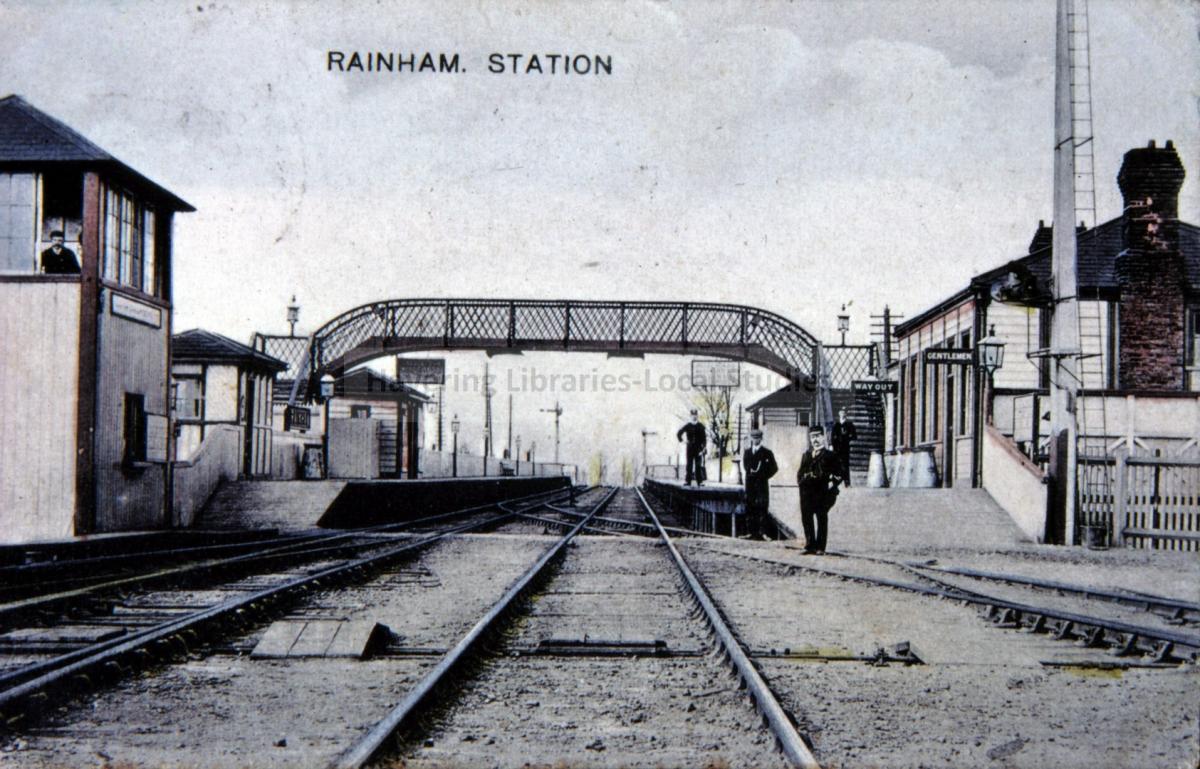


The Recorder is looking back at the history of Rainham station as part of our series marking the 200th anniversary of modern passenger railway in 2025.
Rainham station pre-dates both Hornchurch and Upminster stations - which began development under London, Tilbury and Southend Railway (LTSR) in the early 1880s - with its history stretching back to the 1850s.
It also formed part of LTSR, with the company opening Rainham station in April 1854 as part of its main line which initially ran to Tilbury, and later to Southend Central.

After the opening, annual tickets were available - costing £10 10s between London and Rainham or Barking.
Initially, the station was made up of just two wooden platforms and a wooden station building, with a goods depot also located to the east of the station.
READ MORE: Havering train stations captured in vintage photos
According to Havering Libraries, the station was "seriously damaged" by a fire in 1891, leading to the replacement of a platform and the booking hall.

The new booking hall was again a wooden building, which was eventually replaced in 1961.
A footbridge was also installed in the same year, replacing the previous track crossing at the end of the goods yard.
The station master at Rainham from 1888 was John Goodman, who was previously a coal merchant in Thanet, but changed careers after his business failed.
He replaced previous station master Arthur Johnson Philcox, who left the railway after an 18-year-old goods clerk was hit by a train and killed under his watch, according to Havering Libraries.

READ MORE: Romford station history: Single platform to Havering's busiest station
Mr Philcox sent the goods clerk from the down platform to the opposite side for two books, says Havering Libraries, and when crossing the line he did not see the approach of a goods engine.
An eyewitness account from a passenger in a train that was stopped at the station at the time said the train hit the boy twice, and ran over his leg, "completely crushing it".
Despite being rushed to hospital in London on an express train, he died soon after he was admitted.


Share