


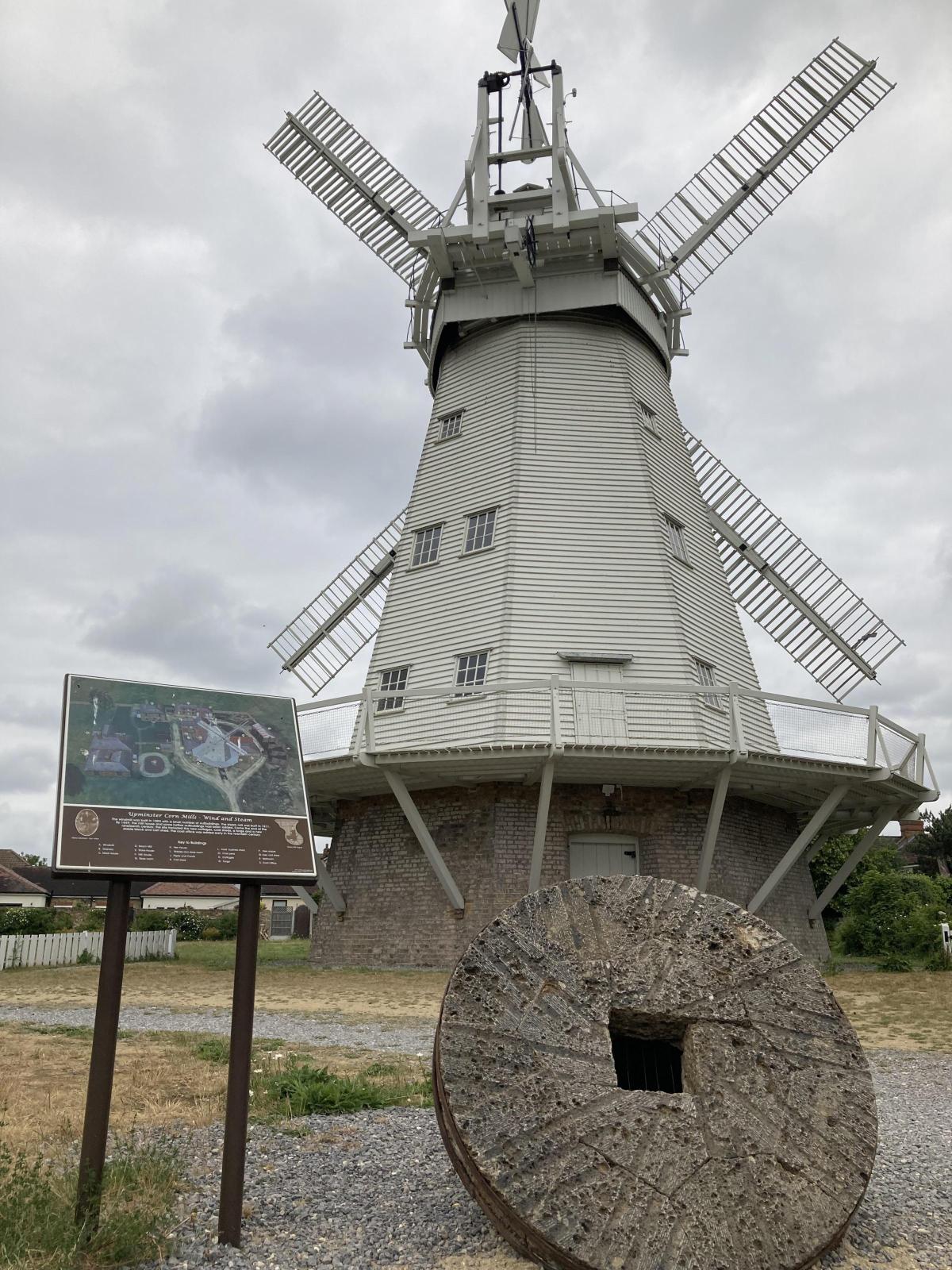


A 220-year-old windmill in Upminster is described as "one of the finest" remaining in England - but do you know the extensive history behind it?
In 1793 James Nokes moved to Upminster from the nearby village of Stifford, taking the tenancy of the 130-acre Hunts Farm.
In 1803 he commenced work building Upminster Windmill to produce flour and two years later, it was completed.
The mill was built with "common" sails, made with wooden frames covered with canvas, according to the windmill's website.

Works began on a steam-powered corn mill in 1810 and were completed a year later, "increasing productivity" with two additional pairs of millstones and enabling milling on windless days.
The introduction of steam power to an existing windmill was "very early in the history of steam engines".
In 1837 Nokes secured a mortgage of £4,500, using the mill estate as collateral.
Following Nokes' death a year later, his son Thomas inherited the mill estate, but on the condition that he took on responsibility for his father's £4,500 mortgage, which carried an annual interest rate of five per cent.
In 1849, Thomas was declared bankrupt and Bridge House Farm was put up for auction in four lots.

Lot three comprised the mill estate and was purchased by Ambrose Colson for £2,000.
The land was controlled by several men in the following years including Charles Welham, James Wadeson and Thomas Abraham.
In 1899, Essex Weekly News reported "very strong" winds caused the sails to be snapped off coming down with a "terrific crash".
Repairs were unaffordable but the loss of the mill was "felt deeply by Upminster residents", who raised more than £100 towards the cost of repairs, according to Upminster Windmill's website.
The mill business paid the rest of the cost "which came over £250" and a second-hand windshaft was obtained from a post mill near Maldon.

Following a decline in traditional milling, it fell out of use.
Urged by the Society for the Protection of Ancient Buildings (SPAB), Essex County Council made an order to prevent the demolition of the windmill, though not the steam mill or other buildings.
In 1939, the mill and a small area of land was bought by the council and in 1945, a retired millwright named Hector Stone was permitted to carry out modifications to the mill at his own cost, with the goal of bringing it up to the legal standard required to produce and sell flour commercially.
Stone remained at the mill until his death in 1952, making significant changes to the internal machinery that are still reflected in the mill's layout today.
Following a public meeting in 1948, a volunteer windmill committee was formed and donations were raised to preserve and maintain the windmill.

Volunteers were recruited and many repairs were undertaken, including some by contractors.
In 1955, the windmill was Grade II listed and its website describes it as "one of the finest remaining smock mills in the country".
A total of five years later, Essex County Council purchased the remainder of the field as it exists today, carrying out works to make the mill safe and improve its external condition.
The ancillary buildings - including the mill house and the steam mill - had by this point fallen into such disrepair that they were demolished.
In 1965, ownership of the windmill was transferred to the new London Borough of Havering and regular public opening days began two years later, continuing until the mill was closed to visitors in 2015 to allow for restoration works.
In September 2023, the mill finally reopened.


Share